NSFAS Declaration Form 2026 (Step-By-Step) Full Details
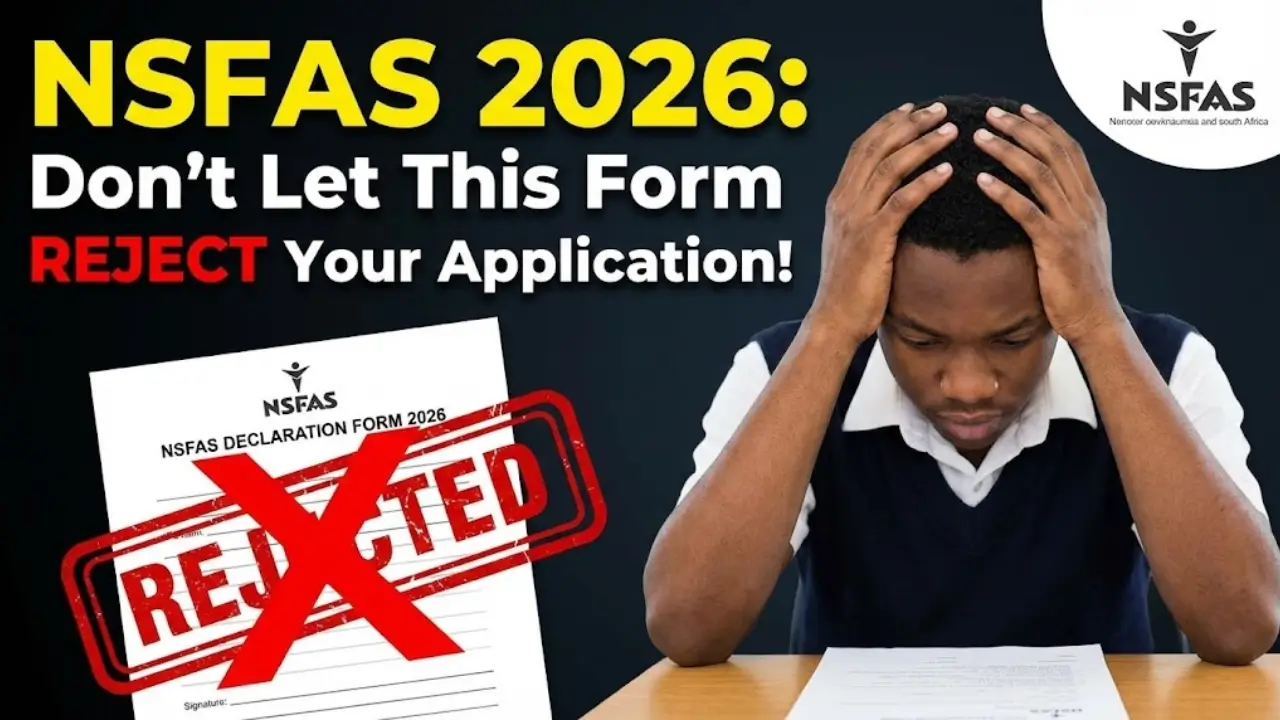
The NSFAS Declaration Form 2026 is one of the most important documents required during the National Student Financial Aid Scheme (NSFAS) application process. Many applications are delayed or rejected simply because this form is not completed correctly.

This guide explains everything you need to know about the NSFAS Declaration Form for 2026, including what it is, why it matters, who must sign it, how to complete it step by step, and common mistakes you must avoid to ensure your application is processed smoothly.
What Is the NSFAS Declaration Form 2026?
The NSFAS Declaration Form is a legal confirmation document that forms part of your NSFAS funding application. By signing this form, you confirm that all the information you submitted to NSFAS is true, accurate, and complete.
This form also gives NSFAS the legal right to verify your personal, financial, and academic information with third parties such as government departments and educational institutions. It protects NSFAS against fraud and ensures that funding is allocated fairly to eligible students.
Applicants who are 34 years old or younger are required to complete this form for the 2026 application cycle. In certain cases, parents, guardians, or officials must also sign the form to confirm household or social circumstances.
You can also read: NSFAS Office Hours January 2026
Why the NSFAS Declaration Form Is Required
The Declaration Form plays a critical role in determining whether your application can move forward. Without it, NSFAS cannot legally assess or approve your funding request.
The form is required because it:
- Confirms that all submitted information is truthful
- Allows NSFAS to verify details with government databases
- Prevents misrepresentation and fraud
- Confirms that you understand NSFAS rules and responsibilities
- Supports fair and transparent funding decisions
Failure to submit a properly completed declaration form may result in your application being placed on hold, delayed, or rejected.
Who Must Complete and Sign the Declaration Form?
Not everyone signs the same sections of the form. Who signs depends on your age and personal circumstances.
The following people may be required to sign:
- The applicant
- Every NSFAS applicant must sign the declaration
- Parent or guardian
- Required if the applicant is under 18
- Required if the applicant is financially dependent
- Social worker or school principal
- Required for orphaned or vulnerable applicants
- Must sign and stamp where indicated
Each signature confirms that the information provided is correct and verifiable.
Step-By-Step Guide to Completing the NSFAS Declaration Form 2026
Completing the form correctly is just as important as submitting it. Follow each step carefully to avoid unnecessary delays.
Download the Correct NSFAS Declaration Form
Always ensure you are using the latest version of the NSFAS Declaration Form for the 2026 application year. Using an outdated form can result in automatic rejection.
Make sure the form:
- Is clearly readable
- Has all pages included
- Matches the correct application cycle
You can also read: Exact Date NSFAS Allowance January 2026
Complete the Applicant’s Personal Information
You must enter your personal details exactly as they appear on your South African ID document.
This includes:
- Full name and surname
- South African ID number
- Contact details (phone and email)
- Residential address
- Institution details (if available)
Even small spelling errors or an incorrect ID number can cause verification failures.
Read the Declaration Section Carefully
This section explains your responsibilities as an NSFAS applicant and beneficiary. It outlines conditions under which funding can be approved, suspended, or withdrawn.
By signing, you acknowledge:
- NSFAS funding rules and academic requirements
- NSFAS’s right to verify your information
- Consequences of submitting false information
You should only sign once you fully understand and accept these conditions.
Parent or Guardian Information (If Required)
If you are a dependent student or under 18, your parent or guardian must complete their section.
They confirm:
- Household income details
- Financial support provided to the applicant
- Accuracy of family information submitted
Leaving this section blank when required will cause your application to be marked incomplete.
Official Verification for Special Cases
Some applicants must have their form verified by an official authority.
This applies to:
- Orphaned students
- Vulnerable children
- Applicants without parental support
A social worker or school principal must:
- Complete the relevant section
- Sign the form
- Apply an official stamp
Signatures, Dates, and Final Checks
This is one of the most critical steps. NSFAS will reject any form that is unsigned or incorrectly completed.
Important rules to follow:
- Use black ink only
- Write in capital letters
- Do not use correction fluid
- Cross out mistakes neatly and initial
- Ensure all required signatures are present
- Date the form correctly
You can also read: NSFAS Funding Crisis 2026 Aid For Thousands of Students
What You Agree to When You Sign the NSFAS Declaration Form
Signing the Declaration Form is a legal agreement between you and NSFAS. It carries serious responsibilities.
By signing, you confirm that:
- Your personal details are correct
- Household income information is accurate
- NSFAS may verify your information
- Funding depends on academic performance and registration
You also agree to inform NSFAS if:
- Your contact details change
- Your household income changes
- You change courses or institutions
- Your academic status changes
Common Mistakes That Delay NSFAS Applications
Many NSFAS applications fail because of avoidable errors. Paying attention to detail can save you months of waiting.
Common mistakes include:
- Using the wrong year’s declaration form
- Missing applicant or guardian signatures
- Leaving required sections blank
- Using correction fluid
- Uploading unclear or blurry documents
- Forgetting to date the form
- Incorrect ID numbers or name spelling
Even one small mistake can affect your application status.
How the Declaration Form Affects NSFAS Approval
The Declaration Form is used by NSFAS to confirm eligibility and prevent fraud. It forms part of the final verification process before funding decisions are made.
NSFAS uses this form to:
- Validate applicant honesty
- Cross-check information with government databases
- Confirm compliance with funding rules
- Protect public funds
An incomplete or incorrect declaration form can stop your application from progressing.
You can also read: NSFAS Online Application for 2026 Good News For Student
NSFAS Declaration Form Key Requirements
| Requirement | Description |
|---|---|
| Correct Form Version | Must match the 2026 application cycle |
| Applicant Signature | Mandatory for all applicants |
| Guardian Signature | Required for dependent or under-18 applicants |
| Official Verification | Required only for special cases |
| Ink and Writing Style | Black ink, capital letters only |
| Corrections | No correction fluid allowed |
Conclusion
The NSFAS Declaration Form 2026 is not just a supporting document; it is a legal confirmation that directly affects your funding outcome. Completing it carefully, honestly, and correctly ensures that your NSFAS application moves forward without unnecessary delays.
By following the steps outlined in this guide and avoiding common mistakes, you significantly improve your chances of a smooth and successful NSFAS application process.
