How to Appeal an NSFAS Rejection Check Common Tips for a Successful NSFAS Appeal

The National Student Financial Aid Scheme (NSFAS) plays a vital role in South Africa’s education system. It exists to support students from low-income households who dream of studying at public universities and TVET colleges but lack the financial means to do so. For many students, NSFAS is not just financial assistance; it is the bridge between ambition and reality.
Without NSFAS, thousands of capable students would be forced to abandon their studies. That is why an NSFAS rejection can feel overwhelming. It threatens not only academic plans but also future career goals.
The Impact of NSFAS on Higher Education Access
NSFAS funding covers essential study costs such as tuition, accommodation, learning materials, and living allowances. This comprehensive support allows students to focus on learning rather than survival. When funding is denied, students often struggle to register or continue their studies, making the appeal process extremely important.
Understanding NSFAS Rejection
An NSFAS rejection does not automatically mean you are permanently disqualified. In many cases, rejections happen due to administrative issues, missing documents, or information that needs clarification. NSFAS processes thousands of applications, and errors or omissions are common.
A rejection is simply a decision based on the information available at the time. An appeal allows you to correct that information and present a clearer picture of your circumstances.
Emotional and Academic Impact of Rejection
Being rejected can be emotionally draining. Students often feel stressed, anxious, and uncertain about their future. Academically, rejection can delay registration or interrupt studies. Understanding that an appeal is possible helps restore hope and gives students a practical way forward.
You can also read: SASSA Grant Payment Dates March 2026 Check Complete Details
Common Reasons Why NSFAS Applications Are Rejected
Household Income Threshold Issues
NSFAS has strict income limits. If your household income appears to exceed the threshold, your application may be rejected, even if the information is outdated or incorrect.
Incomplete or Incorrect Documentation
Missing documents or uploading unclear copies is one of the most common reasons for rejection. NSFAS relies heavily on documentation to verify eligibility.
Other Frequent Reasons Include
- Missing application deadlines
- Failure to meet academic progression rules
- Duplicate applications
- Incorrect dependency or guardianship details
Understanding the exact reason is the foundation of a strong appeal.
Why Appealing an NSFAS Rejection Is Important
The appeal process exists to protect students from being unfairly excluded. If your situation has changed or if an error occurred, an appeal gives NSFAS the opportunity to reassess your application fairly.
Success Rate of Well-Prepared Appeals
Many students successfully overturn rejections by submitting complete documents and clear explanations. A well-prepared appeal significantly increases your chances of approval.
Step-by-Step Guide to Appealing an NSFAS Rejection
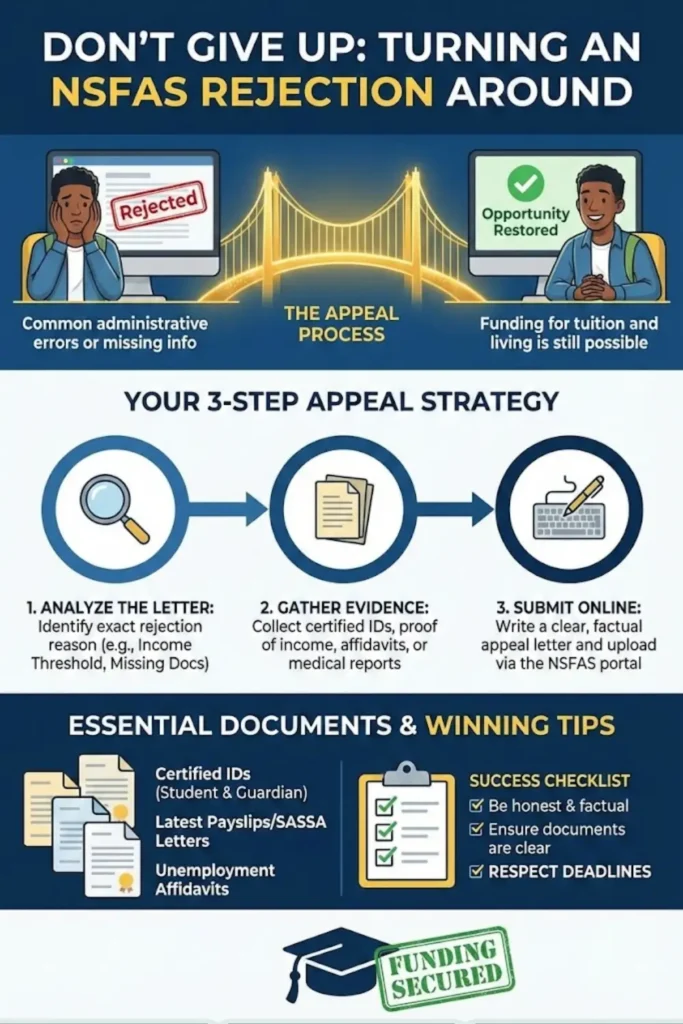
Step 1 – Access and Review Your NSFAS Rejection Letter
NSFAS will notify you via SMS, email, or your online portal. The rejection letter clearly states why your application was unsuccessful. Read it carefully and identify every reason mentioned.
Step 2 – Identify the Exact Reason for Rejection
Your appeal must respond directly to the stated reason. General explanations rarely succeed. Be specific and factual in your response.
Step 3 – Plan Your Appeal Strategy
Before submitting anything, gather all required documents and ensure they directly address the rejection reason. Preparation is key.
Writing a Strong NSFAS Appeal Letter
What to Include in an Appeal Letter
A strong appeal letter should include:
- Full name and ID number
- Student number and institution
- Clear statement of appeal
- Explanation addressing the rejection reason
- List of attached documents
Tone, Language, and Structure
Use simple, respectful language. Avoid emotional exaggeration. Stick to facts and provide evidence. Think of your letter as a formal explanation, not a complaint.
Required Documents for an NSFAS Appeal
Personal Identification Documents
You must submit certified copies of your ID and those of your parents or guardians. These documents verify your identity and household structure.
Proof of Income and Financial Status
NSFAS requires accurate financial evidence, such as:
- Payslips
- Unemployment affidavits
- Social grant letters
Supporting Documents for Special Circumstances
These may include medical reports, death certificates, or social worker letters, depending on your situation.
You can also read: NSFAS Payment Dates for TVET Colleges 2026
NSFAS Appeal Documents Overview
| Document Type | Purpose |
|---|---|
| Certified ID copies | Identity verification |
| Proof of income | Financial eligibility |
| Affidavits | Unemployment or dependency proof |
| Medical reports | Special circumstances |
| Guardian proof | Dependency confirmation |
How and Where to Submit Your NSFAS Appeal
Online Appeal Submission Process
Most appeals are submitted through the NSFAS online portal. Upload documents in clear, readable format and confirm submission.
Submitting Through the Financial Aid Office
Your institution’s financial aid office can assist with submission and verification, reducing errors.
Important Appeal Deadlines
Late appeals are rarely accepted. Always check and respect the official appeal deadline.
What Happens After Submitting an NSFAS Appeal
Review and Assessment Process
NSFAS reviews your appeal, verifies documents, and reassesses your eligibility. This process can take several weeks.
Timeframes and Communication
You will receive updates via SMS or email. Keep checking your portal regularly.
Common Tips for a Successful NSFAS Appeal
- Be honest and accurate
- Submit complete documents
- Explain financial changes clearly
- Keep copies of everything
- Follow instructions exactly
What to Do If Your NSFAS Appeal Is Unsuccessful
If your appeal is declined, explore other funding options such as:
- University bursaries
- Private scholarships
- Student loans
- Part-time employment
Conclusion
An NSFAS rejection is not the end of your academic journey. With the right approach, clear documentation, and a well-written appeal, many students successfully secure funding after rejection. Act quickly, stay organized, and use every available support system. Education is an investment in your future, and one setback should never define your destination.
You can also read: NSFAS Eligibility Requirements 2026