NSFAS Application Status Check Online & Check Helpline Number NSFAS
Education opens doors to opportunity, but for many South African students, financial barriers stand in the way of success. The National Student Financial Aid Scheme, commonly known as NSFAS, exists to remove those barriers. It provides financial support to students from low-income households so they can study at public universities and TVET colleges without worrying about fees.
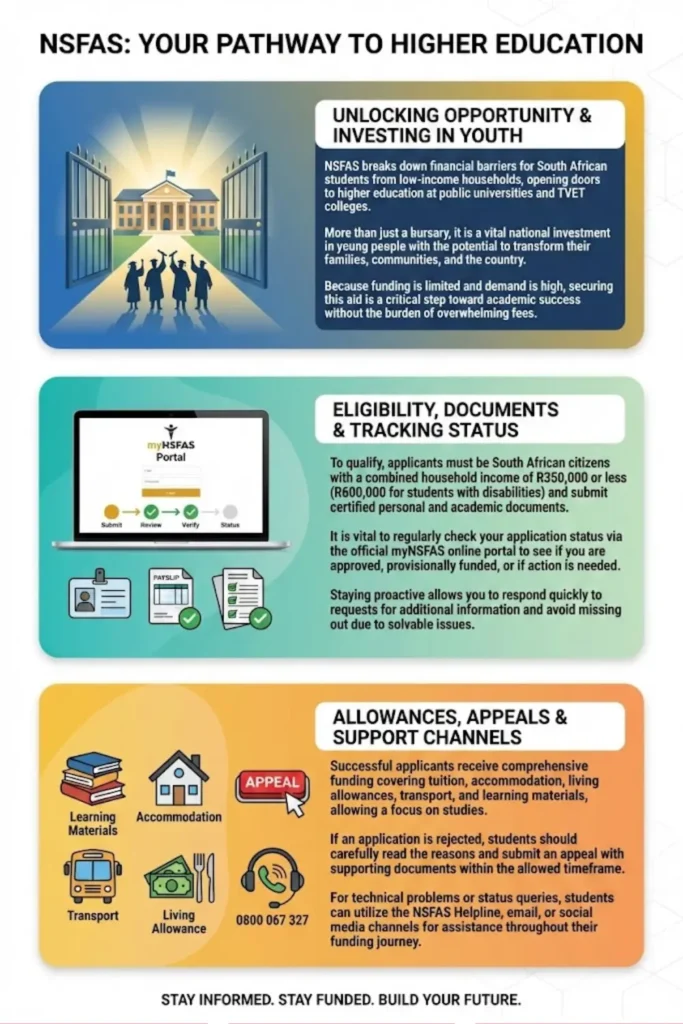
NSFAS is more than a bursary. It is a national investment in young people who have the potential to change their families, communities, and the country. Because funding is limited and demand is high, it becomes extremely important for applicants to track their NSFAS application status and respond quickly when updates are issued.
What Is NSFAS Application Status?
Your NSFAS application status shows the current stage of your funding request. It tells you whether your application is still being processed, approved, provisionally funded, or rejected.
This status is updated as NSFAS reviews your documents, verifies your household income, and confirms your academic eligibility. Each update reflects progress in your application journey.
Why Checking Status Regularly Matters
Many students assume that once they submit an application, their job is done. That is not true. Regularly checking your status helps you:
- See if additional documents are required
- Know when funding is approved
- Identify problems early
- Submit appeals on time
Staying informed can be the difference between securing funding and missing out.
Who Can Apply for NSFAS Funding?
Citizenship Requirements
NSFAS funding is available only to:
- South African citizens
- South African permanent residents
International students do not qualify for NSFAS funding.
Household Income Threshold
To qualify financially, your household income must fall within NSFAS limits:
- Combined household income of R350,000 or less per year
- Students with disabilities: R600,000 or less per year
Meeting these requirements does not guarantee approval, but failing to meet them usually results in rejection.
You can also read: Submit your NSFAS Appeal Within 30 Days of an Unsuccessful Status
Documents Needed for NSFAS Application
Personal Documents
You must upload clear and certified copies of:
- South African ID or birth certificate
- Parent or guardian ID
- Proof of household income or affidavit
Academic Documents
Depending on your situation, you may need:
- Latest school results
- Proof of registration or acceptance
- Academic transcript (for returning students)
Missing or unclear documents often cause delays or rejection.
How to Check NSFAS Application Status Online
Using myNSFAS Portal
The myNSFAS portal is the official online platform where applicants can track their funding progress.
Step-by-Step Process
Follow these simple steps:
- Visit www.nsfas.org.za
- Click on “myNSFAS”
- Log in using your ID number and password
- Select “Track Funding Progress”
- View your current application status
If you do not have an account, you must first create one before checking your status.
Understanding NSFAS Application Status Messages
Approved
Your application has been successful, and NSFAS will fund your studies.
Provisionally Funded
Your application is approved, but some documents still need verification.
Rejected
Your application did not meet one or more requirements.
Pending
Your application is still being processed.
NSFAS Status Meanings Table
| Status Message | What It Means | Action Required |
|---|---|---|
| Approved | Funding confirmed | Register at institution |
| Provisionally Funded | Awaiting verification | Upload missing documents |
| Pending | Under review | Wait and check regularly |
| Rejected | Application unsuccessful | Submit appeal |
NSFAS Helpline Number and Contact Channels
Official Helpline
Students can contact NSFAS using:
- NSFAS Helpline: 0800 067 327
Email and Online Channels
- Email: info@nsfas.org.za
- myNSFAS portal messages
- NSFAS social media platforms
These channels help students resolve technical problems, document issues, and status queries.
When Should You Contact NSFAS Support?
You should contact NSFAS if:
- You cannot log in
- Your status has not changed for a long time
- You uploaded documents but status still shows missing
- Your funding was approved but allowances not paid
Contacting early prevents small issues from becoming big problems.
You can also read: SASSA February 2026 Payment Calendar Know the Full Schedule
Common Problems While Checking NSFAS Status
Login Issues
Students often forget passwords or enter incorrect details.
Incorrect Personal Information
Wrong ID numbers or names cause system errors.
Common issues include:
- Locked accounts
- System timeouts
- Website downtime
How to Fix NSFAS Status Errors
If you face errors:
- Reset your password
- Clear browser cache
- Try a different device
- Contact NSFAS support
Keeping screenshots of errors can help support agents assist you faster.
What to Do After Your Status Is Approved
Once approved:
- Accept your funding offer
- Register at your institution
- Ensure bank details are correct
After registration, NSFAS communicates with your institution to release allowances.
What to Do If Your NSFAS Application Is Rejected
Rejection does not always mean the end.
You should:
- Read rejection reason carefully
- Gather supporting documents
- Prepare for appeal
Many students successfully reverse rejections through appeals.
NSFAS Appeals Process Explained
The appeals process allows students to challenge decisions.
Steps include:
- Log into myNSFAS
- Click “Submit Appeal”
- Upload supporting documents
- Submit within allowed timeframe
Appeals usually open after application results are released.
NSFAS Allowances and What They Cover
NSFAS funding includes:
- Tuition fees
- Accommodation
- Living allowance
- Transport allowance
- Learning materials
These allowances ensure students can focus on studying without constant financial stress.
Important NSFAS Dates to Remember
- Applications open: September
- Applications close: January
- Status updates: February to March
- Appeals window: After results
Missing deadlines can result in losing funding opportunities.
Tips to Increase Your Chances of NSFAS Approval
- Apply early
- Upload clear documents
- Double-check information
- Monitor status regularly
- Respond quickly to requests
Consistency and accuracy play a big role in success.
You can also read: NSFAS R5,200 Allowance Update Distribution of Payment
Conclusion
Checking your NSFAS application status online is one of the most important steps in securing financial aid. It keeps you informed, prepared, and in control of your education journey. Knowing the NSFAS helpline number ensures you always have access to help when challenges arise.
NSFAS continues to change lives by making higher education accessible to thousands of students every year. By staying proactive, organized, and informed, you give yourself the best chance of becoming one of those success stories.