NSFAS Confirms 2026 Student Funding Good News for Registered Students
The National Student Financial Aid Scheme (NSFAS) has officially confirmed that all 2026 funding applications have been processed ahead of the new academic year. This announcement brings major relief and clarity to hundreds of thousands of students across South Africa who rely on NSFAS to access higher education. Completing the process before registrations begin is a big achievement and shows a renewed commitment to efficiency and accountability.
For registered and prospective students, this confirmation is more than just an update it is peace of mind. With funding decisions finalized early, students can plan their academic year, accommodation, and living expenses with confidence. NSFAS has also introduced several system improvements for 2026, making this funding cycle one of the most structured and transparent to date.
Overview of NSFAS 2026 Funding Decisions
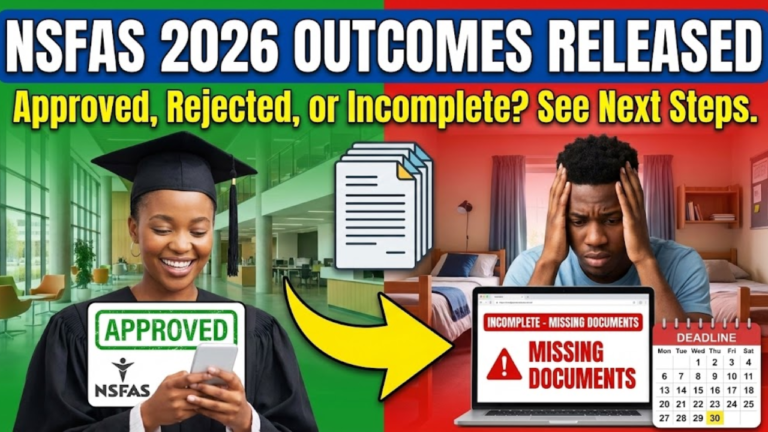
NSFAS received an unprecedented number of applications for the 2026 academic year, highlighting the growing demand for financial support in higher education. After a detailed and rigorous review process, the scheme successfully finalized all outcomes by December 31, 2025, meeting its publicly stated deadline.
Key outcomes of the 2026 funding cycle include:
- Total applications received: 893,847
- Applications approved: 609,653
- Applications rejected: 49,538
- Applications incomplete due to missing documents: 218,043
- Applications cancelled: 16,862
This early completion allows universities and colleges to proceed with registrations without uncertainty around funding statuses.
Record-Breaking Number of Applications Explained
The 2026 cycle recorded the highest number of applications in NSFAS history. This surge reflects both economic pressure on households and increased awareness of NSFAS opportunities among young people.
Several factors contributed to this rise:
- Growing number of matriculants qualifying for higher education
- Increased outreach and digital accessibility of NSFAS applications
- Continued economic challenges affecting low- and middle-income families
This record-breaking response reinforces the critical role NSFAS plays in ensuring equal access to education.
You can also read: NSFAS Payment Schedule 2026 and Check Funding
Gender Distribution of NSFAS Applicants
The application data for 2026 reveals a clear gender pattern, with female students forming the majority of applicants. This trend highlights the increasing participation of women in higher education across South Africa.
Breakdown of applicants by gender:
- Female applicants: 593,981 (66.45%)
- Male applicants: 299,866 (33.55%)
This distribution reflects broader social shifts, where more women are actively pursuing tertiary qualifications to improve long-term economic stability.
Support for SASSA Beneficiaries and Students with Disabilities
A significant portion of NSFAS applicants are already part of South Africa’s social support system. NSFAS continues to prioritize vulnerable groups, ensuring that financial barriers do not block access to education.
Key figures include:
- Applications from SASSA beneficiaries: 520,545
- Applications from students with disabilities: 2,551
These numbers show that NSFAS remains aligned with its mission to support the most financially vulnerable students in the country.
Application Status Breakdown for 2026
Not all applications reached final approval, and NSFAS has clearly explained the reasons behind each status category. Transparency in this area helps students understand where they stand and what actions may still be required.
NSFAS 2026 Application Outcomes Table
| Application Status | Number of Applications |
|---|---|
| Approved | 609,653 |
| Rejected | 49,538 |
| Incomplete | 218,043 |
| Cancelled | 16,862 |
Students with incomplete applications are encouraged to upload missing documents promptly to avoid losing funding opportunities in future cycles.
First-Time Entry Students vs Senior Students
First-time entering students made up the vast majority of NSFAS applications for 2026. This highlights how NSFAS continues to serve as a gateway for new students entering universities and TVET colleges.
Application distribution:
- First-time entry students: 766,232
- Senior students: 125,157
Funding for continuing students depends heavily on academic performance and timely submission of results by institutions.
Age Distribution of NSFAS Applicants
NSFAS funding is not limited to one age group. The 2026 data shows that students from various life stages are seeking education as a tool for career growth and transformation.
Age group breakdown:
- Teenagers: 428,632
- Twenties: 417,823
- Thirties: 42,186
- Forties: 4,585
- Fifty and above: 621
This wide age range proves that learning truly has no expiration date.
You can also read: NSFAS Check Status 2026 Check Funding Stages
Importance of 2025 Academic Results Submission
Universities were required to submit 2025 academic results by December 15, 2025. This step is essential for NSFAS to verify academic eligibility for returning students before releasing funding decisions.
Most institutions met the deadline, allowing NSFAS to:
- Confirm progression requirements
- Finalize funding for continuing students
- Reduce delays during registration
Institutions facing challenges were advised to work directly with their assigned NSFAS administrators.
Early Upload of 2026 Admission Lists
NSFAS has urged universities to upload 2026 admission lists as early as possible. Early submission speeds up validation and ensures that eligible students receive funding confirmation before the academic year begins.
Benefits of early uploads include:
- Faster funding eligibility checks
- Reduced registration congestion
- Improved coordination between NSFAS and institutions
This proactive approach helps prevent last-minute funding issues.
Allowance Distribution for Universities in 2026
Universities will continue to distribute student allowances throughout 2026 under a structured monthly remittance system. Institutions must submit accurate reports to ensure smooth payments.
Allowances covered include:
- Meal allowances
- Accommodation allowances
- Book allowances
- Travel and personal care allowances
Universities are responsible for ensuring that funds reach eligible students correctly and on time.
Private Accommodation Payments and New Framework
For students living in private accommodation, NSFAS has introduced stricter controls to improve transparency. Payments will be made directly to accredited accommodation providers.
Key changes include:
- Mandatory legal agreements between students and providers
- Alignment of accommodation dates with academic calendars
- Prevention of students being stranded between terms
This transitional framework aims to protect both students and service providers.
Upgraded NSFAS Accommodation Portal
NSFAS is upgrading its accommodation portal to create a single, integrated platform for students. This system will simplify the entire accommodation process.
New portal features:
- Online accommodation applications
- Real-time tracking of application status
- Acceptance of offers
- Maintenance issue reporting
Integration with university systems will allow automatic verification of student registration and funding eligibility.
Upfront Allowance Payments Starting February 2026
On February 1, 2026, NSFAS will release an upfront payment to cover essential student needs at the start of the academic year.
The upfront payment will include:
- Full book allowance
- One month of meal allowance
- One month of accommodation allowance
- Travel and personal care allowance
Universities will oversee correct disbursement to eligible students.
Special Measures for TVET Colleges
NSFAS has addressed long-standing cash flow challenges at TVET colleges by introducing advance tuition payments.
Key measures include:
- Upfront payment equal to 20% of 2025 tuition allocation
- Subsequent payments based on verified registration data
- Direct allowance payments into students’ personal bank accounts
Payments will not be made to third-party or institutional accounts, ensuring student control and transparency.
Streamlined NSFAS Appeals Process for 2026
The appeals process for 2026 has been simplified to reduce delays and confusion. Students can appeal immediately after receiving their application outcome.
Important appeal guidelines:
- Appeals window opens with outcome notification
- Supporting documents must be submitted within 30 days
- Late submissions will not be considered
This streamlined system ensures faster resolution for deserving students.
Why NSFAS 2026 Funding Is a Major Win for Students
Finalizing all funding decisions before the academic year begins is a major milestone. It shows improved planning, stronger coordination with institutions, and better use of digital systems.
For students, this means:
- Less stress during registration
- Better financial planning
- Increased trust in the NSFAS system
NSFAS 2026 funding marks a positive shift toward stability and efficiency.
You can also read: NSFAS 2026 Late Application Issue
Conclusion
NSFAS confirming all 2026 student funding decisions ahead of time is undeniably good news for registered and prospective students. With over 609,000 applications approved, improved allowance systems, upgraded accommodation management, and a streamlined appeals process, NSFAS has taken meaningful steps toward a smoother academic year. While challenges remain, the 2026 funding cycle reflects progress, accountability, and a strong commitment to student success.