Nsfas Statuses and Required Documents Details Step by Step
The National Student Financial Aid Scheme, commonly known as NSFAS, is a South African government initiative created to support students from low- and middle-income households. Its main goal is to remove financial barriers that prevent deserving students from accessing higher education at public universities and TVET colleges. NSFAS funding covers tuition, accommodation, transport, meals, and learning materials, making it a lifeline for many students.
Understanding NSFAS is not just about applying for funding. It is also about knowing how the system works after submission. Many students panic when they see unfamiliar statuses on their myNSFAS account. These statuses are not random. Each one represents a specific stage in the application process and tells you exactly what NSFAS is doing with your application.
Why Understanding NSFAS Statuses Is Important
NSFAS statuses act like checkpoints on a long road trip. Each status shows how far you have traveled and what still lies ahead. When students understand these statuses, they are less likely to panic, miss deadlines, or ignore important document requests.
Knowing what each status means helps you:
- Respond quickly when NSFAS asks for documents
- Track progress without unnecessary stress
- Avoid delays caused by missing or incorrect information
- Prepare for possible appeals if declined
When you know what is happening behind the scenes, you stay in control of your funding journey.
You can also read: NSFAS Completes 2026 Student Funding Details
How the NSFAS Application Process Works
Step-by-Step NSFAS Application Journey
The NSFAS application process follows a structured path. Once you submit your application, it does not jump straight to approval or rejection. Instead, it moves through several verification and assessment stages designed to ensure fairness and accuracy.
The journey typically includes:
- Online application submission
- Identity and income verification
- Document evaluation
- Academic checks
- Final funding decision
Each stage depends on the accuracy of the information and documents you provide. Even a small mistake can slow down the process.
Timeline Expectations for Students
NSFAS does not operate on instant results. Processing thousands of applications takes time. Some statuses may last days, while others can take weeks, especially during peak application periods.
Delays often happen due to:
- High application volumes
- Missing or unreadable documents
- Verification with external bodies like SARS or Home Affairs
Patience and regular account checks are key during this period.
Understanding NSFAS Application Statuses
Application Submitted Status
This is the first status you will see after completing your application. It confirms that NSFAS has successfully received your information and stored it in their system.
At this stage:
- No verification has started yet
- You cannot edit most details
- You should keep your reference number safe
This status simply means you are officially in the system.
Filtering and Validation Status
Filtering and validation is one of the most critical stages. NSFAS checks your personal and household information against official databases.
They verify details with:
- Home Affairs for ID validation
- SASSA for grant information
- SARS for income verification
If inconsistencies are found, NSFAS may request additional documents. This is a normal part of the process.
Evaluation Status
During evaluation, NSFAS reviews your uploaded documents and academic information. This is where they confirm whether you meet the financial and academic requirements.
They focus on:
- Household income thresholds
- Authenticity of documents
- Academic eligibility
Accurate documents help this stage move faster.
You can also read: NSFAS Payment Schedule 2026 South Africa Step by Step Complete Guide
Awaiting Academic Results or Registration
This status usually applies to Grade 12 learners or first-year students. NSFAS waits for final school results or confirmation that you have registered at a public institution.
This step ensures:
- You meet minimum academic standards
- You are officially enrolled
Once results or registration are confirmed, the application moves forward.
Provisionally Funded Status
Provisionally funded means you are almost there. NSFAS has approved your funding conditionally, pending final checks or registration confirmation.
Important points include:
- Funding is not yet released
- Registration must be completed
- Final approval depends on compliance
Think of this as a “yes, but just one more step” stage.
Funding Eligible Status
This status confirms that you meet all financial and academic criteria. It means NSFAS has no major issues with your application.
At this stage:
- Your application is successful
- Final processing is underway
- Approval is usually next
It is a positive sign that funding is on the way.
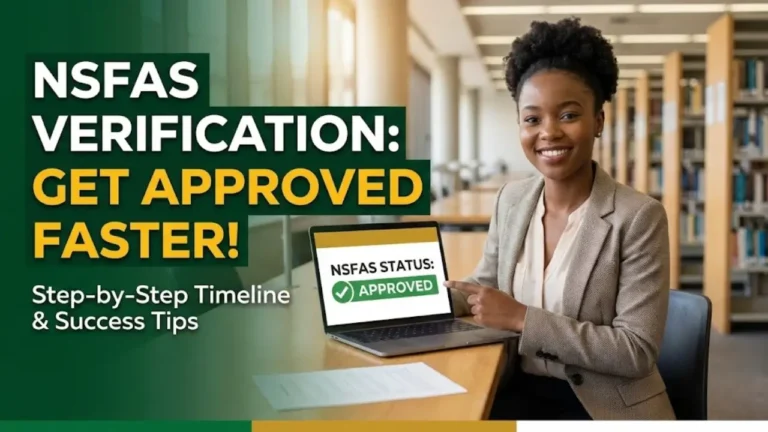
Approved Status
Approved is the status every student hopes to see. It means your funding has been fully approved and allocated.
Once approved:
- Funds are released to your institution or wallet
- Tuition and allowances are processed
- You are officially an NSFAS-funded student
Always check that your registration details are correct to avoid payment delays.
Application Declined Status
A declined status means your application did not meet NSFAS requirements. This can be due to income thresholds, academic criteria, or missing documents.
Common reasons include:
- Household income above the limit
- Incorrect or false information
- Failure to meet academic requirements
Students can submit an appeal if they believe the decision was incorrect.
Detailed Explanation of NSFAS Status Flow
From Submission to Approval
The NSFAS status flow follows a logical progression. Each stage builds on the previous one, ensuring that only eligible students receive funding.
The flow includes:
- Submission
- Verification
- Evaluation
- Academic confirmation
- Funding decision
Skipping or delaying any step can stall the entire process.
Common Delays and Reasons
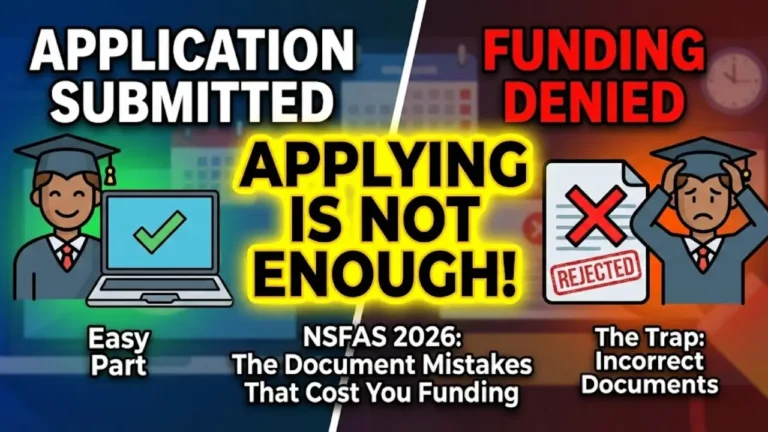
Delays are usually caused by document-related issues. Uncertified IDs, outdated payslips, or unclear scans can push your application back.
Other causes include:
- Late responses to NSFAS requests
- System overload during peak periods
Quick responses reduce waiting time.
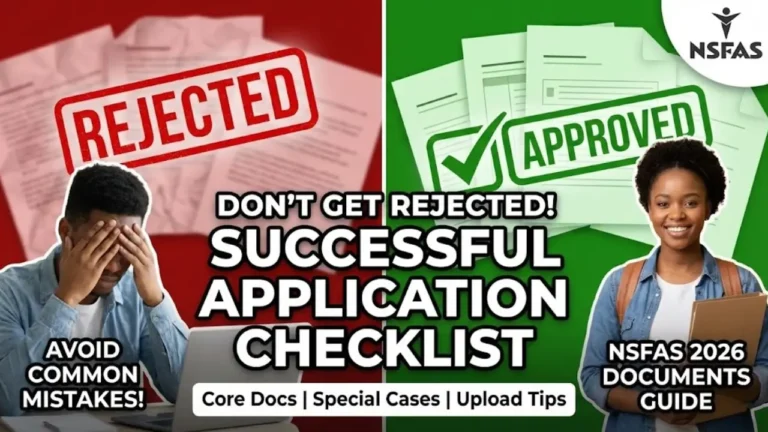
Required Documents for NSFAS Applications
General Documents Required for All Applicants
Every NSFAS applicant must submit a standard set of documents. These documents confirm identity, household structure, and academic background.
General documents include:
- Certified copy of your ID or birth certificate
- Certified IDs of parents, guardians, or spouse
- Latest academic transcript if not in Grade 12
Documents must be clear and readable.
You can also read: Funding Relief from NSFAS Acknowledged as SASCO
Household and Income-Related Documents
NSFAS assesses funding eligibility based on household income. Proof of income is required for all working household members.
Accepted proof includes:
- Payslips not older than three months
- IRP5 forms
- Employment letters
Accurate income documents are crucial for approval.
Special NSFAS Supporting Documents Explained
Disability Annexure A Form
Applicants living with disabilities must submit the Disability Annexure A Form. This form confirms the nature and impact of the disability.
It helps NSFAS:
- Allocate appropriate support
- Ensure fair assessment
The form must be completed by a qualified professional.
Vulnerable Child Declaration and Consent Form
This form applies to students who are orphaned, abandoned, or under social services care.
It confirms:
- Vulnerable status
- Consent for verification
Supporting documentation strengthens the application.
Orphaned or No Family Support Declaration
Students without parental support must submit a declaration or social worker report.
Accepted documents include:
- Non-SASSA declaration form
- Social worker affidavit
These documents explain the student’s living situation.
Documents for Unemployed Parents or Guardians
If a parent or guardian is unemployed, NSFAS requires proof.
Accepted proof includes:
- Retrenchment letter
- Affidavit confirming unemployment
This ensures accurate income assessment.
Certification Rules for NSFAS Documents
How to Certify Documents Correctly
All copies must be certified within the last three months. Certification confirms authenticity.
Certification can be done by:
- Police stations
- Commissioners of Oaths
Each page must be stamped and signed.
Common Certification Mistakes to Avoid
Many applications are delayed due to certification errors.
Avoid:
- Expired certification
- Partially stamped documents
- Illegible copies
Double-check before uploading.
NSFAS Document Checklist Table
| Document Type | Who Must Submit | Validity |
|---|---|---|
| Certified ID | Applicant & Household | 3 Months |
| Proof of Income | Working Members | 3 Months |
| Academic Transcript | Non-Grade 12 | Latest |
| Annexure A | Disabled Applicants | Current |
| Declaration Forms | Special Cases | Current |
How to Upload Documents on myNSFAS
Step-by-Step Upload Process
Uploading documents correctly is just as important as submitting them.
Steps include:
- Log in to myNSFAS
- Select outstanding documents
- Upload clear PDF or image files
Always confirm successful uploads.
What to Do If Uploads Fail
If uploads fail, try again later or reduce file size. System traffic can affect uploads during peak times.
Tips for a Smooth NSFAS Application Process
Staying Updated and Organized
Organization is your best friend during the NSFAS process.
Helpful habits include:
- Regular account checks
- Keeping digital document copies
- Monitoring email notifications
Staying alert prevents missed deadlines.
Avoiding Common NSFAS Errors
Mistakes often lead to unnecessary stress.
Avoid:
- Ignoring document requests
- Uploading wrong files
- Missing appeal deadlines
Accuracy saves time.
Reporting Issues and Fraud
When and How to Report Problems
If you suspect fraud or experience issues, report them immediately.
NSFAS encourages transparency and accountability.
Official NSFAS Contact Channels
Fraud and issues can be reported to:
Using official channels ensures proper action.
Conclusion
Applying for NSFAS can feel overwhelming, but understanding statuses and document requirements makes the journey easier. Each status has a purpose, and every document tells your story. When you stay informed, organized, and responsive, you significantly increase your chances of success. NSFAS is not just funding; it is an opportunity to focus on your future without financial stress.
You can also read: How to Check NSFAS Document Submission Deadline 2026