SASSA Child Grant Guide Essential Support for South African People Check New 2026 Details

Raising a child is not easy, especially when money is tight. Many South African families struggle daily to provide food, clothing, school supplies, and healthcare for their children. This is where the SASSA Child Support Grant becomes a lifeline. It offers monthly financial assistance to low-income families, helping them meet the basic needs of their children.
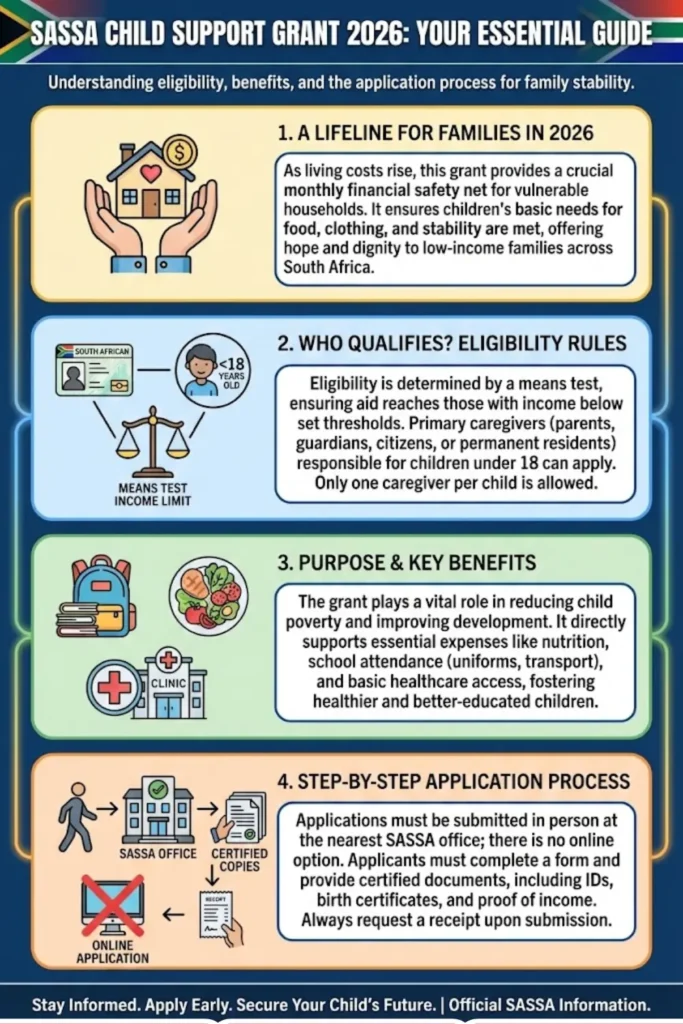
As living costs continue to rise in 2026, understanding how the SASSA Child Grant works has never been more important. This guide explains everything in simple terms, from eligibility and application to payment amounts and common challenges, so families can access support without confusion.
Why the SASSA Child Grant Matters in 2026
Economic pressure is increasing across South Africa. Food prices, transport costs, and school expenses keep climbing, making it harder for vulnerable households to cope. The SASSA Child Grant plays a critical role in protecting children from extreme poverty and hunger.
Millions of children rely on this grant every month. It does more than provide money; it offers stability, dignity, and hope for a better future. In 2026, staying informed about updates, eligibility rules, and grant amounts helps families avoid missed payments and unnecessary stress.
What Is the SASSA Child Support Grant?
The SASSA Child Support Grant is a government-funded social assistance program designed to support children under the age of 18. It is paid monthly to a primary caregiver, who can be a parent, grandparent, or legal guardian.
The grant helps cover essential child-related expenses such as:
- Basic food and nutrition
- Clothing and personal care
- School needs and transport
- Healthcare and clinic visits
This support ensures that children grow up in a safer and healthier environment, even when family income is limited.
You can also read: TVET College NSFAS Payments 2026
Who Manages the SASSA Child Grant?
The South African Social Security Agency (SASSA) is responsible for managing and distributing the Child Support Grant. SASSA handles applications, payments, reviews, and appeals.
Their role includes:
- Verifying eligibility and documents
- Processing monthly payments
- Reviewing grants regularly
- Preventing fraud and misuse
SASSA offices operate nationwide, making it easier for caregivers to apply and receive assistance.
Purpose and Benefits of the Child Support Grant
The main goal of the Child Support Grant is to reduce child poverty and promote child development. When families receive steady financial support, they can focus more on raising healthy, educated children.
Key benefits include:
- Reduced hunger and malnutrition
- Improved school attendance
- Better access to healthcare
- Lower financial stress for caregivers
Over time, these benefits contribute to stronger families and healthier communities across South Africa.
How the Grant Helps Reduce Child Poverty
Child poverty affects education, health, and emotional well-being. The SASSA Child Grant helps break this cycle by ensuring children’s basic needs are met.
The grant supports families by:
- Providing money for daily meals
- Allowing children to attend school regularly
- Reducing the need for child labor
- Supporting early childhood development
Even though the grant amount may seem small, its impact on a child’s life is significant when used consistently.
Impact of the Grant on Education and Healthcare
Education and healthcare are two of the most important areas influenced by the Child Support Grant. Families often use the money to buy uniforms, stationery, and pay for transport to school.
In healthcare, the grant helps with:
- Clinic visits and medication
- Basic hygiene and sanitation
- Nutritional food for growing children
This support ensures children can focus on learning and growing instead of surviving.
You can also read: NSFAS Appeals Now Open Check
Eligibility Criteria for the SASSA Child Grant
Not everyone qualifies for the SASSA Child Grant. The government uses strict rules to ensure support reaches families who truly need it.
Eligibility is based on:
- Caregiver’s legal status
- Child’s age and residence
- Household income
Meeting all requirements is essential for approval and continued payments.
Caregiver Requirements
To qualify as a caregiver, you must:
- Be a South African citizen, permanent resident, or refugee
- Live in South Africa
- Be the primary person responsible for the child
Caregivers can include:
- Biological parents
- Grandparents
- Foster parents
- Legal guardians
Only one caregiver can receive the grant per child.
Child Eligibility Rules
The child must meet specific conditions to qualify for the grant:
- Be under 18 years old
- Live in South Africa
- Not be cared for in a government institution
The grant stops automatically when the child turns 18 unless another grant applies.
Income Limits and Means Test Explained
SASSA uses a means test to determine financial eligibility. This test checks the caregiver’s income to ensure the household falls below the set threshold.
General income limits include:
- Single caregiver: income below the annual threshold
- Married caregivers: combined income below the set limit
If income exceeds these limits, the application may be rejected or the grant suspended.
Documents Required for SASSA Child Grant Application
Having the correct documents speeds up the application process. Missing paperwork often causes delays or rejection.
Required documents include:
- Caregiver’s South African ID or smart ID
- Child’s birth certificate
- Proof of income or affidavit if unemployed
- Proof of residence
- Proof of primary care if not the biological parent
All copies must be certified.
Step-by-Step Application Process
Applying for the SASSA Child Grant is simple but must be done correctly. The application is completely free.
The process includes:
- Visiting a SASSA office
- Completing the application form
- Submitting documents
- Receiving a receipt as proof
Applications are processed carefully to ensure fairness.
Where and How to Apply
Applications must be submitted in person at the nearest SASSA office. A SASSA official will assist you in completing the form.
Important points to remember:
- Bring all required documents
- Apply during office hours
- Ask for your receipt after submission
There is no online application option for the Child Support Grant.
What Happens After You Apply
After submission, SASSA reviews your application. Processing can take up to three months, but payments are backdated to the application date if approved.
You will be notified of:
- Approval or rejection
- Payment start date
- Collection method
If rejected, you have the right to appeal.
SASSA Child Grant Amount in 2026
Understanding the grant amount helps families plan their monthly budget. The amount is reviewed annually based on inflation and economic conditions. The grant supports essential needs rather than full living costs.
Current Payment Value
As of recent updates, the SASSA Child Support Grant amount is approximately R560 per child per month. This amount may change following budget announcements.
The money is intended for:
- Food and nutrition
- Education-related costs
- Basic healthcare needs
You can also read:
Expected Increases and Adjustments
Grant increases are usually announced during the national budget speech. Possible increases in 2026 depend on economic performance and inflation.
Caregivers should:
- Follow official SASSA updates
- Avoid relying on rumors
- Check payment notices regularly
Payment Methods and Collection Options
SASSA offers multiple payment options for convenience.
| Payment Method | Description |
|---|---|
| Bank Deposit | Paid directly into your bank account |
| SASSA Card | Withdraw at ATMs or retail stores |
| Cash Pay Points | Collect at designated locations |
Choosing the right method ensures easier and safer access to funds.
Reasons for Grant Suspension or Cancellation
Grants can be suspended if rules are not followed. Many suspensions happen due to unreported changes.
Common reasons include:
- Income exceeding the limit
- Failure to update personal details
- Missing review appointments
- Fraud or false information
Common Problems and How to Fix Them
| Problem | Solution |
|---|---|
| Income increased | Report changes immediately |
| Missing documents | Submit certified copies |
| Payment not collected | Visit SASSA office |
| Details outdated | Update information promptly |
Quick action can often restore suspended grants.
Important Tips to Avoid Delays or Rejection
To keep your grant active:
- Always report life changes
- Keep documents updated
- Attend SASSA reviews
- Collect payments regularly
Staying informed helps avoid unnecessary interruptions.
Future of the SASSA Child Grant in South Africa
The SASSA Child Grant remains a cornerstone of South Africa’s social support system. As policies evolve, the focus remains on protecting children and reducing poverty.
Future improvements may include:
- Better processing systems
- Faster approvals
- Increased grant values
Conclusion
The SASSA Child Support Grant is more than financial aid; it is a foundation for a better future for millions of South African children. By understanding eligibility, application steps, and payment rules, caregivers can ensure continuous support for their families. Staying informed and proactive is the key to making the most of this essential social grant in 2026 and beyond.
You can also read: SASSA SRD Grant Status Check Process 2026