Submit your NSFAS Appeal Within 30 Days of an Unsuccessful Status

The National Student Financial Aid Scheme (NSFAS) plays a vital role in helping students from low-income and working-class families access higher education in South Africa. Through loans and bursaries, NSFAS covers essential study-related costs for students enrolled at universities and TVET colleges. However, not every application is approved on the first attempt.
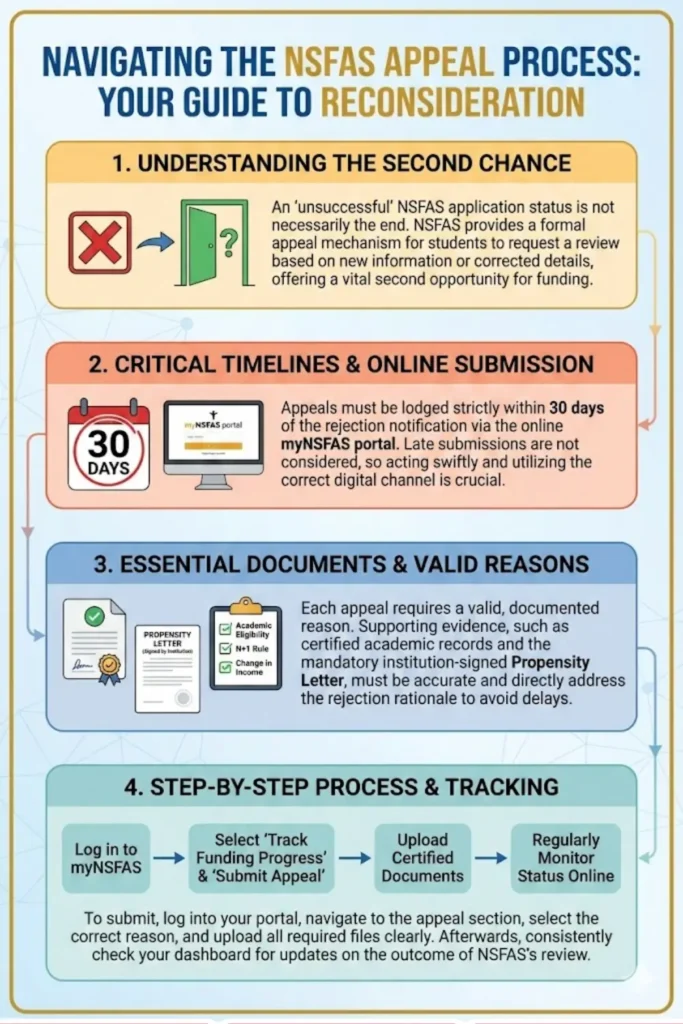
If your NSFAS application status shows “unsuccessful”, it does not always mean the end of the road. NSFAS provides students with a formal appeal process that allows them to request a review of their application. This article explains everything you need to know about tracking your NSFAS status, understanding rejection reasons, and submitting a successful appeal within the required timeframe.
Understanding the NSFAS Application and Appeal Process
NSFAS applications usually open toward the end of the year and close in the following calendar year. During this period, thousands of students submit applications that go through several verification and assessment stages before a final funding decision is made.
When an application is declined, NSFAS gives applicants 30 days to submit an appeal through the myNSFAS portal. An appeal gives NSFAS the opportunity to reassess your application using additional documents or updated information that may change the outcome.
Key points to remember about the NSFAS appeal process include:
- Appeals are only submitted online via the myNSFAS portal
- Each appeal must include a valid reason and supporting documents
- Appeals submitted after 30 days are not considered
You can also read: NSFAS Application Rejected & Check Login Problem
How to Track Your NSFAS Application Status Online
Once you have submitted your NSFAS application, it is important to regularly monitor your status. NSFAS does not always send immediate notifications, so checking the portal helps you stay informed and act quickly if required.
To track your NSFAS application status:
- Log in to your myNSFAS account using your username and password
- Select “Track Funding Progress”
- Review the status displayed on your dashboard
Your status may remain unchanged for some time, especially while NSFAS waits for information from institutions or government departments. This is normal and does not automatically indicate a problem with your application.
Meaning of Common NSFAS Application Statuses
Many applicants see different terms on the NSFAS system and are unsure what they mean. Each status reflects a specific stage of the assessment process.
Below is a clear explanation of common NSFAS application statuses:
- Application Submitted: Your application was successfully uploaded
- Filtering: NSFAS is checking previous qualifications and student history
- Validation: Third-party checks with SASSA and Home Affairs are underway
- Evaluation: Submitted documents are being reviewed
- Funding Eligibility: Household income is being assessed
- Awaiting Academic Results or Admission: NSFAS is waiting for confirmation from your institution
- Awaiting Registration: Institution data is required to create a bursary agreement
- Signing of Agreement: You must sign your bursary agreement
- Payments: Allowances are being processed or paid
Understanding these stages helps reduce confusion and prevents unnecessary stress during the waiting period.
What Is a NSFAS Propensity Letter and Why It Matters
A NSFAS propensity letter is an official document required during the appeal process. It must be completed and signed by your institution’s finance or financial aid office. This document provides NSFAS with additional academic and registration details.
NSFAS uses the propensity letter to:
- Verify your academic progress or enrollment status
- Confirm eligibility for reconsideration
- Support the motivation provided in your appeal
Without a correctly completed propensity letter, your appeal may be delayed or rejected. Applicants must download the correct letter type that matches their appeal reason.
What NSFAS Funding Covers for Approved Students
NSFAS funding is designed to cover both academic and basic living expenses, allowing students to focus fully on their studies. Funding benefits apply to eligible university and TVET college students.
NSFAS funding typically includes:
- Tuition and registration fees
- Student accommodation or housing allowance
- Transport allowance for commuting students
- Book and stationery allowance
- Living and food allowances
These benefits aim to remove financial barriers and promote equal access to higher education across South Africa.
You can also read: Coinvest NSFAS Login Status Check Online
What to Do If Your NSFAS Application Is Declined
An unsuccessful NSFAS application can be disappointing, but it is not always final. NSFAS allows students to appeal if they believe the decision was based on incomplete, incorrect, or changed information.
Before submitting an appeal, applicants should:
- Carefully read the reason for rejection on the portal
- Gather relevant and certified supporting documents
- Download the correct propensity letter
Acting quickly is essential, as appeals must be submitted within the given 30-day window.
Step-by-Step Guide to Submitting a NSFAS Appeal
Submitting a NSFAS appeal is a structured process that must be completed through the myNSFAS portal. All required documents should be clear, certified, and relevant to your appeal reason.
Follow these steps to submit your appeal:
Log in to your myNSFAS account at www.nsfas.org.za
- Click on “Track Funding Progress”
- Check your application status
- Select “Submit Appeal” if marked unsuccessful
- Choose the correct appeal reason
- Upload certified supporting documents
- Submit the appeal and monitor progress online
After submission, NSFAS will review your appeal and update your status once a decision is made.
Common NSFAS Appeal Reasons and Required Documents
Different appeal reasons require different supporting documents. Submitting the correct documents increases your chances of approval.
| Appeal Reason | Required Supporting Document |
|---|---|
| Failure to meet academic eligibility | Academic records and propensity letter |
| N+1 appeal | Completed N+1 propensity letter |
| N+2 students with disability | Disability confirmation and propensity letter |
| Registered for 50% or less credits | Proof of final-year registration |
Applicants should ensure that documents are recent, certified, and clearly readable before uploading them.
Conclusion
The NSFAS appeal process exists to give students a fair second chance. Many appeals are successful when applicants submit accurate documents and follow the correct procedures within the deadline.
You can also read: Install Moya App Check SASSA Status
Students are encouraged to stay informed, regularly check their myNSFAS portal, and seek assistance from their institution’s financial aid office if needed. Submitting your NSFAS appeal on time and with the correct information can make a significant difference in securing funding for your studies.
